


12 Safari Styles for 2026: Which Matches Your Travel Goals?
Updated: Aug 4
12 Ways to Experience Kenya Beyond the Standard Circuit
This is for you if you're researching Kenya safaris but unsure how to articulate what kind of experience you actually want, or you're comparing operators and they all sound the same because they're describing identical itineraries.
When you read this you will discover twelve distinct safari approaches based on current travel trends and research, identify which motivations align with your actual travel goals, and understand how Kenya safaris can be designed around who you are rather than generic "wildlife viewing" packages.
Frequently Asked Questions About Safari Styles
Can Kenya safaris be customized beyond wildlife viewing?

Yes. While wildlife is central to any Kenya safari, how you experience it varies dramatically based on your motivations. A photographer prioritizes different locations and timing than someone seeking cultural immersion. A wellness-focused traveler needs different pacing than a family with young children. Kenya offers sufficient diversity - landscapes, cultures, activities - to support genuinely different safari approaches.
What's the difference between safari "types" and safari "packages"?
Safari packages are pre-built itineraries you select from a menu. Safari types describe the underlying motivation or approach - what you're actually trying to accomplish. Most operators offer packages. Custom safari planning starts with understanding your type, then builds an itinerary that delivers on that specific motivation.
How do I know which safari style fits me?
Read through the twelve styles below. Which description makes you think "yes, that's exactly what I want"? That self-recognition is your answer. If multiple styles resonate, they can often be combined - a wellness safari can include cultural immersion, a photography safari can incorporate conservation elements.
Do certain safari styles only work during specific seasons?
Most safari styles work year-round in Kenya, though timing affects the experience. Off-season enhances some styles (wellness, photography, hidden gems) by reducing crowds. Peak season suits others (multigenerational, visitors who dream of the Great Migration). The right timing depends on your specific style and priorities.
Can Complete Safaris accommodate all these styles?
Yes. Our approach is consultation-first: we ask what you're trying to accomplish, then design around that motivation. Anthony's 30 years in Kenya means he can guide for photography, culture, families, or wellness with equal expertise. If we haven't designed a specific style before, his extensive network of on-the-ground relationships in Kenya allows us to create it.
What are the 12 styles?
Continue reading for specifics, but the 12 safari styles for 2026 at a quick glance are:
Wellness Reset Safari
Cultural Immersion Safari
Educational Family Safari
Roots/Heritage Safari
Solo Safari
Multi-generational Safari
Photography Safari
Conservation Focused Safari
Romance/Honeymoon Safari
Culinary Safari
Hidden Gem Safari
The Slow Travel (Extended) Safari
Not All Safaris Are Created Equal
When most people imagine "going on safari," they picture the same thing: game drives searching for the Big Five, sundowners watching the sunset, evenings around the fire at a luxury lodge.
That's not wrong. It's just incomplete.

The safari industry has commodified one experience and called it universal. But research on American travelers in 2026 shows people travel for wildly different reasons: 31% to escape stress, 26% for cultural experiences, 16% for children's education, 18% seeking hidden gems, 28% for self-care.
One safari template can't serve all those motivations.
Your safari should match why you're actually traveling - not just where you're going. Below are twelve distinct approaches to Kenya safaris, each aligned with specific 2026 travel trends and motivations. Find yours.
1. THE WELLNESS RESET SAFARI
The Data: 73.5% of off-season travelers rate wellness support as extremely/very important. 31% are motivated by "escaping stress of daily life."
Who This Is For:
You're successful and exhausted. You need genuine reset, not luxury performance. You value uncrowded experiences where you can actually decompress. You're seeking mental space, not just physical distance.
What It Looks Like in Kenya:
Off-season timing (fewer crowds = genuine peace)
Longer stays in fewer locations (no rushed schedules)
Properties with space and silence (not party atmosphere)
Daily flexibility (game drives optional, not mandatory)
Digital limitations embrace (Kenya's limited WiFi as feature, not bug)
Nature exposure focus (proven mental health benefits)
Why It Works:
Kenya's landscapes naturally support wellness - vast spaces, minimal light pollution, wildlife encounters that trigger awe response. Off-season timing removes the performance pressure of peak tourism. You're not checking boxes. You're decompressing.
Complete Safaris Approach:
We won't add "wellness activities" to standard safaris. We design pacing that allows actual rest - more time sitting with morning coffee watching elephants, less rushing between locations. Anthony recognizes when guests need silence rather than constant wildlife narration.
2. THE CULTURAL IMMERSION SAFARI
The Data: 26.4% motivated by "experience the culture of a place." 19.3% prioritize museums/cultural experiences.
Who This Is For:
You're intellectually curious about Kenya beyond wildlife. You want to understand Swahili coastal heritage, colonial history, contemporary Kenyan society. You value UNESCO sites as much as game reserves.
What It Looks Like in Kenya:
Coastal component (Lamu Old Town, Fort Jesus in Mombasa, Gedi in Watamu)
Karen Blixen Museum/colonial history context
Time with Maasai communities (authentic, not tourist performances)
Nairobi National Museum and contemporary art scene
UNESCO World Heritage Sites (8 in Kenya)
Local food experiences (not just lodge dining)
Why It Works:
Kenya offers 700 years of documented Swahili maritime history, colonial legacy, pastoral cultures, and modern urban development. This depth exists independent of safari tourism - you're not forcing cultural "experiences" into wildlife trips, you're exploring genuine heritage.
Complete Safaris Approach:
Anthony's 30 years in Kenya means he provides cultural context most guides skip. We build itineraries that treat cultural sites as equal to wildlife reserves, not add-ons if time permits. Coastal components connect to inland experiences to show Kenya's full identity.
Related: "Kenya's UNESCO Hat Trick," Fort Jesus blog, Gedi Ruins blog, Lamu Old Town blog
3. THE EDUCATIONAL FAMILY SAFARI
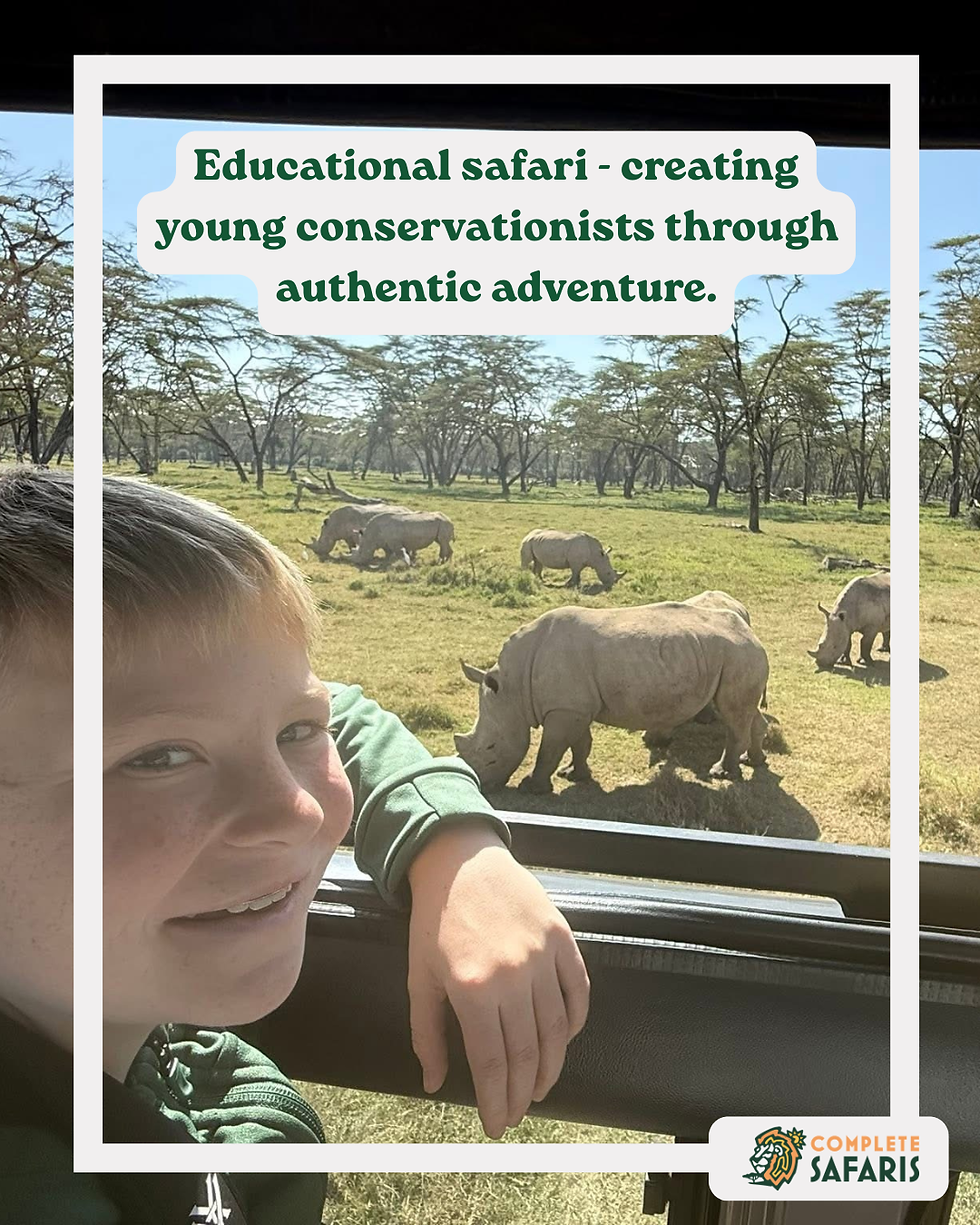
The Data: 16.3% of off-season travelers motivated by "experiences for my children." Parents seek identity as "engaged parent who prioritizes educational experiences."
Who This Is For:
You're a working parent who values experiences over things. You want your children to see the world, understand conservation, encounter cultures beyond their own. This trip is an investment in their worldview, not just a vacation.
What It Looks Like in Kenya:
Age-appropriate wildlife education (what kids actually absorb)
Conservation context (why Kenya's wildlife matters)
Cultural exposure (Maasai communities, coastal heritage)
Child-paced activities (Anthony adapts to attention spans)
Sensory experiences kids remember (sounds, smells, scale)
Photos they'll show in school presentations
Why It Works:
Safari provides education schools can't deliver - scale, conservation context, cultural diversity, patience, wonder. Done right, it creates young conservationists and globally-aware citizens. Done wrong, it's expensive and the kids are bored.
Complete Safaris Approach:
Anthony has guided families for three decades. He knows when to explain animal behavior and when to let kids just watch. We select properties that accommodate children without becoming kid-focused theme parks. Logistics are handled so parents can be present with their children.
4. THE ROOTS/HERITAGE SAFARI
The Data: Growing trend of heritage tourism - visiting ancestral homelands, exploring family history, connecting with cultural roots.
Who This Is For:
You have Kenyan ancestry or African heritage you want to explore. You're seeking connection to homeland, understanding family history, or exploring cultural identity. This is personal, not just touristic.
What It Looks Like in Kenya:
Genealogy research support (connecting with communities)
Visits to ancestral regions (if known)
Contemporary Kenyan society exposure (not frozen-in-time tourism)
Time with local families (authentic connection)
Documentation (photography, journals, family stories)
Combining heritage exploration with wildlife experiences
Why It Works:
Kenya welcomes heritage travelers seeking connection. Unlike countries where colonial history complicates these visits, Kenya's independence and Pan-African identity support diaspora exploration. Wildlife safari can complement heritage travel without dominating it.
Complete Safaris Approach:
Heritage travel requires different approach than standard safari. We facilitate connections with local communities, provide context for regions, and design itineraries that honor the personal nature of heritage travel. Wildlife becomes shared experience rather than primary purpose.
5. THE SOLO SAFARI
The Data: 25.3% motivated by self-care. 17.5% seek "personal growth." Solo travel accelerating among professionals and retirees.
Who This Is For:
You're traveling alone by choice. You want flexibility without group compromises. You value solitude but not isolation. You're comfortable with yourself and seeking experiences that match that comfort.
What It Looks Like in Kenya:
Private vehicle with Anthony (no group tours)
Flexible daily scheduling (your pace, your preferences)
Solo-friendly lodges (genuine hospitality)
Safety and logistics handled (so you can relax)
Option for social time or solitude (both available)
Depth over breadth (time to actually process experiences)
Why It Works:
Safari is naturally conducive to solo travel - private vehicles, small lodges, structured but flexible days. Unlike destinations where solo travelers join groups to access experiences, Kenya safari can be genuinely solo without feeling lonely.
Complete Safaris Approach:
Solo safari works beautifully with our model - private vehicle with Anthony means you're never joining a group tour or compromising on your pace. Anthony reads when guests want conversation versus silence. We select lodges that treat solo travelers as valued guests, not logistical inconveniences. Single supplements exist across the safari industry, but our custom approach means we design around your actual needs rather than forcing you into group pricing structures.
6. THE MULTIGENERATIONAL SAFARI
The Data: 36.8% travel to "visit friends/relatives." Multigenerational travel growing among families wanting shared experiences across generations.
Who This Is For:
You're planning a trip that includes children, parents, and grandparents - three generations with different needs, abilities, and interests. You want everyone to have meaningful experiences without anyone feeling left out or overwhelmed.
What It Looks Like in Kenya:
Pace accommodating different energy levels
Activities suitable for various mobility levels
Private vehicles (no rushing slower family members)
Lodges with multi-room configurations
Flexible participation (optional game drives)
Shared experiences everyone can enjoy
Photos capturing generations together
Why It Works:
Safari provides shared awe - watching elephants transcends age and ability. Kenya offers activities beyond game drives (cultural visits, relaxation, shorter excursions) so non-adventurous family members aren't forced into endurance tests.
Complete Safaris Approach:
Multigenerational safari works well with our custom model - private vehicle means no rushing slower family members, and we can design pace accommodating different energy levels. Anthony adjusts his guiding style for the group composition, knowing when to engage kids versus when to provide depth for adults. We select properties with configurations that give family space to be together or apart as needed throughout the day.
7. THE PHOTOGRAPHY SAFARI
The Data: 34.7% motivated by "exploration" and "desire to see new places." Photography travelers seek unique angles, lighting, and access.

Who This Is For:
You measure safari success by photos captured, not just sightings witnessed. You understand lighting, composition, and timing. You need vehicle positioning that serves photography, not just viewing.
What It Looks Like in Kenya:
Off-season advantages (better light, fewer vehicles blocking shots)
Timing around golden hours (early morning, late afternoon departures)
Anthony's positioning expertise (reading animal behavior for photo opportunities)
Flexibility to wait for moments (not rushing to next sighting)
Private vehicle (no compromising for group preferences)
Focus on quality over quantity (better to nail one sighting than rush through ten)
Why It Works:
Kenya's wildlife remains active year-round, but off-season offers better conditions for photography - fewer vehicles competing for position, more flexibility to linger, dramatic lighting from varied weather. Anthony's ability to read animal behavior means positioning before moments happen, not reacting after.
Complete Safaris Approach:
We design differently for photography - longer in each location, timing for light, willingness to return to sightings, patience when waiting for behavior. Anthony's natural photographic eye (a gift, not learned skill) means he understands what photographers need without constant direction.
8. THE CONSERVATION-FOCUSED SAFARI
The Data: 29.8% seek to "enjoy nature/spend time outdoors." Growing interest in understanding conservation challenges and solutions.
Who This Is For:
You care about wildlife conservation beyond enjoying wildlife viewing. You want to understand threats Kenya's ecosystems face, meet people working on solutions, and potentially support conservation efforts beyond your trip.
What It Looks Like in Kenya:
Visits to conservancies (not just national parks)
Meeting rangers and conservation managers
Understanding human-wildlife conflict challenges
Learning about specific species conservation programs
Supporting conservation-focused lodges
Context for what your tourism fees actually fund
Why It Works:
Kenya's conservation story is complex and accessible - community conservancies, anti-poaching efforts, human-wildlife conflict mitigation, successful species recovery programs. Many lodges support specific conservation initiatives you can learn about and contribute to.
Complete Safaris Approach:
Anthony provides conservation context most guides skip - why fences exist in certain areas, how community conservancies work, which species face what threats. We facilitate meetings with conservation professionals for travelers seeking deeper understanding. Your lodge selection can prioritize properties with demonstrated conservation commitment. If you're interested in hands-on volunteer work, we can design that into your safari through our network of conservation partners.
Related: "Why We Don't Guarantee Wildlife Sightings"
9. THE ROMANCE/HONEYMOON SAFARI
The Data: 17.8% motivated by "romance/intimacy with spouse or partner." Honeymoon and anniversary travel remains strong safari category.
Who This Is For:
You're celebrating - honeymoon, anniversary, or just prioritizing time together. You want experiences that create shared memories, properties that feel special, and space to focus on each other without distractions.
What It Looks Like in Kenya:
Adults-only or romance-focused properties
Private dinners/special arrangements
Stunning landscapes (not just wildlife functionality)
Couples massages/spa experiences where available
Photographic documentation (professional photos)
Pace allowing actual relaxation (not exhausting schedules)
Privacy in vehicles and accommodations
Why It Works:
Safari naturally creates shared awe and adventure - bonding through elephants crossing your path, sundowners watching African sunsets, early morning coffee together before game drives. The inherent drama of landscape and wildlife provides romantic backdrop without manufactured romance.
Complete Safaris Approach:
We coordinate special touches with lodges - champagne surprises, private dinners, celebration arrangements. Anthony gives space when couples want quiet together time in vehicle. We build in downtime so you're not exhausted. This is celebration, not endurance test.
10. THE CULINARY/FOOD SAFARI
The Data: 27.2% prioritize "local food scene" in travel planning. Growing interest in authentic food experiences beyond hotel dining.
Who This Is For:
You believe food is cultural gateway. You want to understand Kenyan cuisine, taste coastal Swahili fusion, experience nyama choma culture, and eat where Kenyans actually eat - not just lodge buffets designed for international palates.
What It Looks Like in Kenya:
Nairobi food scene exploration (emerging culinary city)
Coastal cuisine experiences (Swahili fusion of Arab/African/Indian)
Traditional foods in authentic settings
Lodge dining that showcases Kenyan ingredients
Market visits (seeing ingredients in context)
Understanding food's role in Kenyan culture
Anthony's favorite local spots (insider access)
Why It Works:
Kenya's food culture is underappreciated by safari tourists. Coastal Swahili cuisine is sophisticated and historically significant. Nairobi has emerging restaurant scene. Traditional pastoral foods tell cultural stories. Most safari operators ignore this entirely because they assume tourists want "international cuisine."
Complete Safaris Approach:
Anthony knows where Kenyans actually eat. We can incorporate food experiences that provide cultural depth beyond wildlife. Coastal component is particularly strong for culinary exploration. We select lodges that source locally and prepare thoughtfully rather than defaulting to international buffets.
11. THE HIDDEN GEMS/OFF-SEASON SAFARI
The Data: 17.8% actively prioritize "hidden gems." 58% of off-season travelers plan international trips. They have 30% higher household income and actively avoid crowds.
Who This Is For:
You avoid tourist crowds because they diminish your experiences. You value authenticity over popularity. You're willing to accept some uncertainty in exchange for exclusive experiences. You prefer discovery over following well-trodden paths.
What It Looks Like in Kenya:
Off-season timing (fewer tourists, better conditions)
Lesser-known properties (not Instagram-famous lodges)
UNESCO coastal sites (most safari tourists skip)
Conservancies over major national parks
Flexibility to follow opportunities (not rigid schedules)
Experiences feeling like discovery, not tourism
Exclusive or near-exclusive wildlife sightings
Why It Works:
Kenya's off-season (April-May, November-early December) offers superior wildlife viewing without crowds. Dispersal travelers seeking hidden gems don't want popular experiences - they want authentic discovery. This aligns perfectly with Kenya's quieter months and lesser-known regions.
Complete Safaris Approach:
This is our natural positioning. We actively recommend off-season because conditions genuinely improve. Anthony's expertise matters more when you can't just follow radio chatter. We design itineraries avoiding where everyone else goes, focusing on quality over Instagram popularity.
Related: "Kenya's Hidden Gem Season: When Crowd-Free Safaris Shine"
12. THE SLOW TRAVEL/EXTENDED SAFARI
The Data: 34.7% motivated by "exploration." Growing rejection of rushed itineraries in favor of deeper, slower experiences.
Who This Is For:
You have time and reject the "see everything" mentality. You'd rather spend five days in one place understanding it deeply than two days each in five places checking boxes. You value depth over breadth, immersion over coverage.
What It Looks Like in Kenya:
Fewer locations, longer stays (4-5 nights minimum each)
Time to observe wildlife behavior patterns
Relationship building with lodge staff
Becoming familiar with specific territories
Return visits to favorite sightings
Processing experiences rather than rushing through
Understanding landscapes, not just seeing them
Why It Works:
Wildlife behavior reveals itself over time - you notice patterns on day four that were invisible day one. Staying longer means Anthony can show you his favorite spots multiple times under different conditions. Lodge staff remember you. You stop performing "I'm on safari" and start actually experiencing it.
Complete Safaris Approach:
We resist the industry pressure to maximize locations. Kenya offers sufficient diversity that spending serious time in 2-3 regions delivers more value than rushing through 5-6. We accommodate travelers with flexible schedules who want to actually settle in rather than constant movement.
Your Safari Should Match Who You Are

Notice what's missing from these twelve safari styles: there's no "standard" version. No "classic Kenya safari" that works for everyone.
That's intentional.
The safari industry wants you to believe there's one right way to experience Kenya - peak season, specific circuit, identical properties, same activities. This commodification serves operators (easier logistics, better margins) while pretending to serve travelers.
But travelers in 2026 are motivated by wildly different goals: wellness (73.5%), culture (26.4%), children's education (16.3%), hidden gems (17.8%), self-care (25.3%), food (27.2%). One template can't serve all of those.
Your safari should start with consultation about what you're actually trying to accomplish - not selection from package menu. These twelve styles aren't comprehensive (you might identify with multiple, or none exactly).
They're frameworks for thinking about what "successful safari" means to you specifically.
When operators describe identical itineraries regardless of who's asking, they're revealing they don't actually customize - they're revealing they have one product and hope it randomly matches your needs.
Complete Safaris starts differently: we ask what version of yourself this trip is supposed to serve. The educational parent? The culturally curious retiree? The exhausted professional needing genuine reset? Then we design around that identity, not around standard circuit.
Anthony's 30 years in Kenya means he can guide for photography, families, culture, wellness, or conservation with equal expertise. The question isn't whether he can deliver what you need. The question is what you actually need.
Which of these twelve styles made you think "yes, that's exactly what I want"?
That's where your safari planning should start.
Ready to design a Kenya safari around who you actually are rather than what the industry assumes you want?
Let's start with a conversation about what you're trying to accomplish. Email Lutricia.


