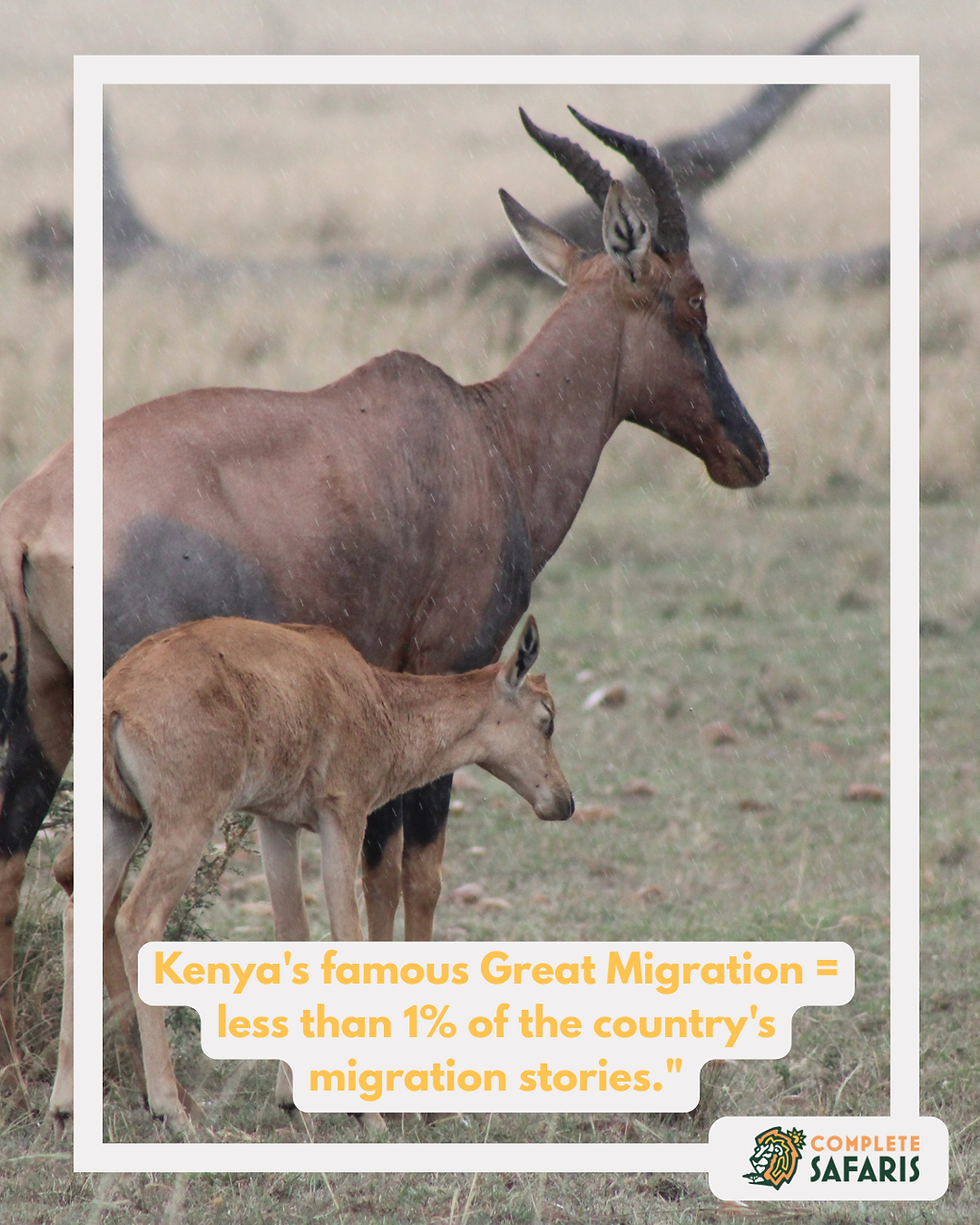
The Great Migration Alternative that Works Year Round
Forget everything you think you know about the Great Migration. The most remarkable migration story in Kenya doesn't happen in the Maasai Mara. It happens seven kilometers from downtown Nairobi, where skyscrapers form the backdrop for one of Africa's most important wildlife corridors.
Welcome to Nairobi National Park, the world's only wildlife capital, where lions roam within sight of a major international airport and elephants once migrated past in numbers that rivaled the Serengeti.
The Migration That Built a Nation

Before Nairobi existed, before the railway came, before humans drew boundaries on maps, the Athi-Kapiti plains hosted a migration as grand as anything in the Serengeti. Herds of animals followed the rains and moved across vast grasslands from Mount Kilimanjaro to Mount Kenya, a spectacle that would have taken your breath away.
Today, that ancient migration corridor still exists, compressed and changed but unbroken. Nairobi National Park serves as the northern boundary for wildlife migrations during the dry season, while the southern plains of Kitengela remain crucial feeding areas when the rains return.
The genius of Nairobi National Park
It's both a destination and a corridor. Animals don't just live here, they flow through, maintaining connections to ecosystems stretching far beyond the park's 117 square kilometers.
During the wet season, animals disperse across the park as abundant grass makes territory sharing possible. When the dry season arrives, they concentrate around the park's small dams and the Mbagathi River, creating some of the most reliable wildlife viewing in Kenya. Nairobi is also the only capital city in the world with a national park within the city limits.
Most visitors don't realize that Nairobi National Park represents less than 10% of the Athi-Kapiti ecosystem. The "park" is actually just the protected core of a much larger wildlife system that extends across community lands, private ranches, and conservation areas.
This ecosystem pulses with migration patterns:
Dry Season Concentration: Animals gather in the park around permanent water sources
Wet Season Dispersal: Wildlife spreads across the southern plains to graze on fresh grass
Year-Round Movement: The open southern boundary allows continuous migration flow
The Elephant Connection That Changed Everything
Here's a migration story that will surprise you: Nairobi National Park once hosted elephants as part of the greater Athi-Kapiti migration system. These weren't residents, they were travelers, moving through as part of seasonal patterns that connected distant ecosystems.
The human development pressure became too intense. As Nairobi grew and the surrounding areas developed, elephant-human conflicts increased. The difficult decision was made to relocate the park's elephants to larger, more remote areas where they could roam safely.

Read about two additional elephant migration corridors in either Amboseli to Tsavo or the Great Migration Routes No One Talks About
But the migration infrastructure remains in the capital region. The corridors, the seasonal patterns, the community relationships—they're all intact, serving other species and maintaining the ecosystem's integrity.
Today, visitors can see orphaned elephant calves at the David Sheldrick Wildlife Trust nursery within the park. These young elephants, rescued from across Kenya, are being prepared for eventual release into larger protected areas like Tsavo. It's migration delayed, not migration ended.
The Great Migration Alternative That Works Year-Round
While Tanzania's Great Migration creates crowding during peak months, Nairobi National Park offers migration experiences throughout the year:
January-March: Dry season concentrates animals around water sources. Best time for predator sightings as prey animals are predictable.
April-June: Rains trigger dispersal patterns. Watch animals move from concentrated areas to spread across wider territories.
July-September: Peak dry season brings animals back to the park's permanent water sources. Wildlife viewing becomes increasingly predictable.
October-December: Short rains begin the cycle again, with animals starting to disperse as new grass appears across the plains.

The Birding Migration Bonus
Nairobi National Park hosts over 500 permanent and migratory bird species, making it one of Kenya's premier birding destinations. The artificial dams have created wetland habitats that attract water-dependent species during migration periods.
European winter visitors arrive in November and stay through March, adding hundreds of migratory species to the park's resident populations. Raptors, in particular, use the park as a crucial stopover on intercontinental migration routes.
Ready to learn more about migration patterns in Kenya? Or simply want to figure out if a safari is a fit for your life right now? Let's talk!